


Search Courses
Propulsion theory
Astroscience
Propulsion theory is the branch of physics and engineering
that studies the principles, mechanisms, and technologies used to generate a
force (thrust) to move an object forward through a medium (like air or water)
or through the vacuum of space.
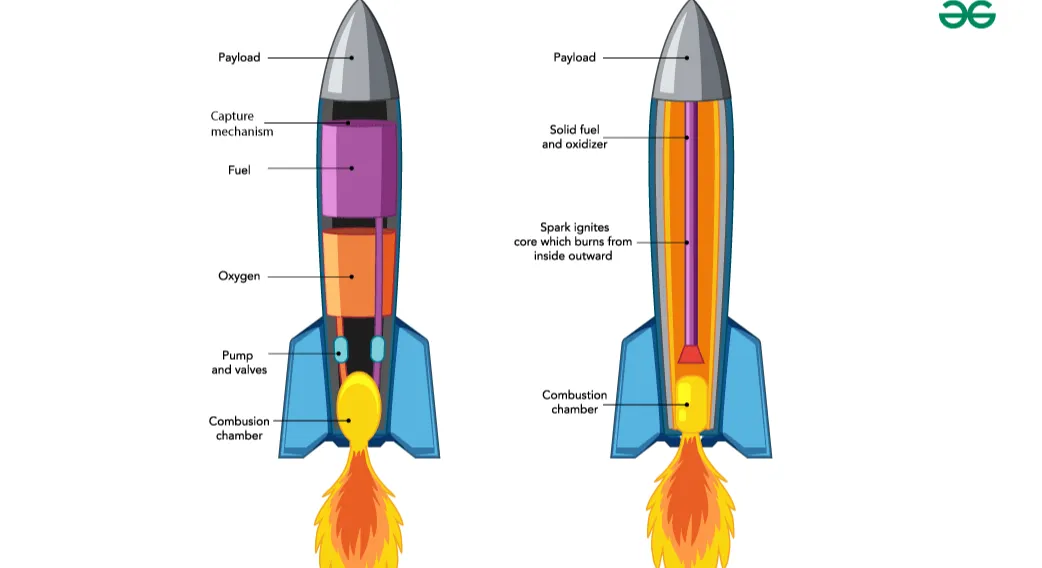
It is fundamentally based on Newton's Third Law of Motion: "For every action, there is an equal and opposite reaction." Propulsion systems work by accelerating a mass of working fluid (air, water, exhaust gases, or ions) in one direction, causing a reaction force (thrust) to push the vehicle in the opposite direction.


What you’ll learn
Thrust Generation: To understand and apply the principles of
physics, primarily Newton's Third Law of Motion (for every action there is an
equal and opposite reaction), to accelerate a working fluid (like air, exhaust
gas, or ions) in one direction to produce a reactive force (thrust) in the
opposite direction.
Efficiency Optimization: To maximize propulsive efficiency
and fuel efficiency (or specific impulse for rockets) by optimizing engine
design and performance parameters. This ensures maximum distance or operational
time with the least amount of fuel consumption.
Performance Analysis and Prediction: To use fluid dynamics, thermodynamics, and combustion chemistry to model, analyze, and predict the performance of different propulsion systems (e.g., turbojets, turbofans, rockets, electric propulsion) under various operating conditions like altitude, speed, and environment.
Thrust Generation: To understand and apply the principles of
physics, primarily Newton's Third Law of Motion (for every action there is an
equal and opposite reaction), to accelerate a working fluid (like air, exhaust
gas, or ions) in one direction to produce a reactive force (thrust) in the
opposite direction.
Efficiency Optimization: To maximize propulsive efficiency
and fuel efficiency (or specific impulse for rockets) by optimizing engine
design and performance parameters. This ensures maximum distance or operational
time with the least amount of fuel consumption.
Performance Analysis and Prediction: To use fluid dynamics, thermodynamics, and combustion chemistry to model, analyze, and predict the performance of different propulsion systems (e.g., turbojets, turbofans, rockets, electric propulsion) under various operating conditions like altitude, speed, and environment.
-->


Requirements
Undergraduate Degree (B.S. or B.Tech): The most common
pathways are degrees in:
Aerospace
Engineering: This provides a direct path with integrated coursework on
propulsion systems, aerodynamics, and flight mechanics.
Mechanical
Engineering: This offers a broader foundation in thermodynamics, fluid
mechanics, and materials science that is highly applicable to propulsion
systems across various industries.
Related Fields: Degrees in Physics, Chemical Engineering, or Materials Science can also be viable, often requiring supplementary coursework or a relevant master's degree to bridge knowledge gaps.
Aerospace
Engineering: This provides a direct path with integrated coursework on
propulsion systems, aerodynamics, and flight mechanics.
Mechanical
Engineering: This offers a broader foundation in thermodynamics, fluid
mechanics, and materials science that is highly applicable to propulsion
systems across various industries.
Related Fields: Degrees in Physics, Chemical Engineering, or Materials Science can also be viable, often requiring supplementary coursework or a relevant master's degree to bridge knowledge gaps.
-->Course Review

Adhila
Studentuuuuuuuuuuuuuuuuuuuuuuuuuuuuuu